

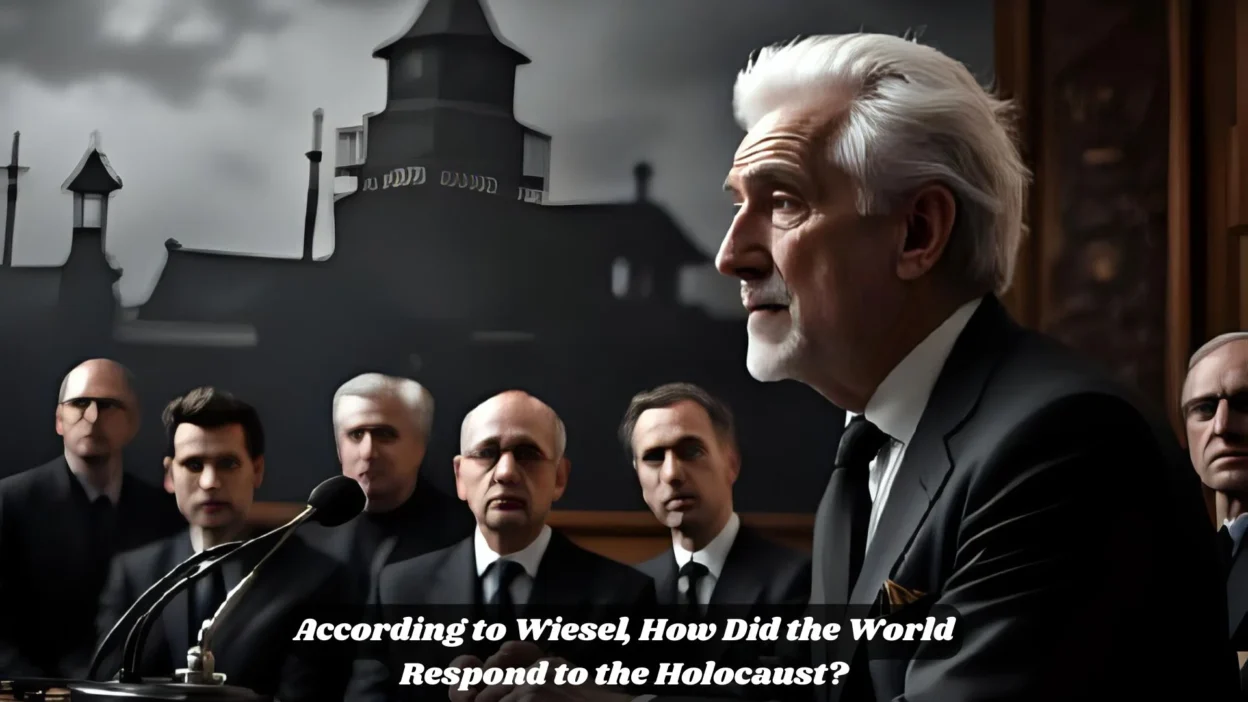
Looking for the right way to express “according to Wiesel, how did the world respond to the Holocaust”?
You’re in the right place. Many situations demand different tones—whether formal, casual, or professional.
This guide gives you a complete list of clear, thoughtful ways to say it, while helping you understand the deeper meaning of Wiesel’s reflection on the world’s silence during one of history’s darkest times.
Lets dive in!
Sorry Generator
Formal Ways to Say According to Wiesel, How Did the World Respond to the Holocaust
Use these phrases in essays, research papers, debates, or official discussions.
- Based on Wiesel’s reflections, how did global powers react to the Holocaust
- As Wiesel highlights, what was the international response to the Holocaust
- Drawing from Wiesel’s viewpoint, how did the world react during the Holocaust
- In Wiesel’s analysis, how did nations respond to the atrocities of the Holocaust
- From Wiesel’s perspective, what was the reaction of the world to the Holocaust
- As Elie Wiesel observed, how did the world address the Holocaust
- Taking Wiesel’s testimony into account, how did the global community respond
- In Wiesel’s view, how did world leaders act during the Holocaust
- According to Wiesel’s memoir, how did humanity react to the Holocaust
- Reflecting Wiesel’s insights, how did the world handle the Holocaust
- Wiesel contends the world remained silent—how can this response be understood
- As presented in Wiesel’s speeches, what was the world’s stance during the Holocaust
- How did international communities behave, in light of Wiesel’s commentary
- How does Wiesel interpret the world’s silence during the Holocaust
- According to Wiesel’s account, how did the allies respond to the Holocaust
- Based on Wiesel’s Nobel Peace Prize speech, how did the world respond to Nazi crimes
- In Wiesel’s telling, how did people outside of Europe act
- Using Wiesel’s words as a lens, how did society react to genocide
- As noted by Wiesel, what was the collective response to Jewish suffering
- According to Wiesel’s historical recollection, how did nations behave
- Through Wiesel’s lens, what does the world’s response to the Holocaust reveal
- With Wiesel’s experience in mind, how should we view the global reaction
- In light of Wiesel’s witness, how did humanity respond
- Referencing Wiesel’s views, what was the reaction to mass extermination
- Wiesel emphasized silence—what does that mean for the world’s reaction
- In the view of Wiesel, how did the Holocaust reshape world consciousness
- As stated by Wiesel, what moral responsibility did the world neglect
- Wiesel spoke of indifference—how did the world show that
- Through Wiesel’s eyes, how did political leaders respond to the Holocaust
- In Wiesel’s judgment, what role did bystanders play during the Holocaust
- Elie Wiesel argued silence is complicity—how does this reflect the world’s response
Informal Ways to Say According to Wiesel, How Did the World Respond to the Holocaust
Use these in casual talks, school discussions, or social media.
- What did Wiesel say about how the world acted during the Holocaust
- How does Wiesel think people reacted back then
- What was Wiesel’s take on how the world dealt with it
- What does Wiesel say about the world’s silence
- How did Wiesel feel about how no one helped
- Why did Wiesel say the world stayed quiet
- Did Wiesel think the world ignored the Holocaust
- What did Wiesel think about the outside world’s reaction
- Why does Wiesel think people didn’t do anything
- How did Wiesel describe people’s reactions
- What does Wiesel mean when he says the world was silent
- How does Wiesel explain the world’s response
- What did Wiesel notice about how others reacted
- Did the world listen, according to Wiesel
- How did Wiesel sum up the world’s behavior
- Was the world paying attention, in Wiesel’s eyes
- Did Wiesel believe the world cared
- What was the world doing while this happened, says Wiesel
- How does Wiesel think people outside Europe acted
- Did Wiesel think anyone tried to help
- Was the world just watching, according to Wiesel
- What was Wiesel’s opinion on how leaders reacted
- Did Wiesel think the world failed the victims
- What was Wiesel’s message about global reaction
- How did Wiesel describe the silence
- What did Wiesel say about how others turned away
- How does Wiesel see the world’s role in this
- Why did Wiesel call out the silence
- What lesson does Wiesel want the world to learn
- Did Wiesel forgive the world’s response
Idiomatic Ways to Say According to Wiesel, How Did the World Respond to the Holocaust
These use common English expressions to explain deeper meaning.
- From Wiesel’s point of view, the world turned a blind eye
- As Wiesel might put it, the world sat on its hands
- Wiesel believed the world dropped the ball
- Wiesel says the world missed the mark
- To Wiesel, the world looked the other way
- The world turned a deaf ear, as Wiesel saw it
- According to Wiesel, the world stayed on the sidelines
- Wiesel felt the world swept it under the rug
- The world didn’t lift a finger, says Wiesel
- Wiesel’s take: the world stood by
- The world froze in fear, Wiesel might argue
- Wiesel thought the world hid behind closed doors
- He believed the world watched from the sidelines
- Wiesel said silence spoke louder than words
- The world zipped its lips, in Wiesel’s words
- According to Wiesel, the world shrugged it off
- As Wiesel saw it, the world passed the buck
- The world had its head in the sand, according to Wiesel
- Wiesel said the world failed to answer the call
- As Wiesel warned, silence was deadly
- Wiesel felt the world turned cold
- The world missed the boat, according to Wiesel
- In Wiesel’s words, the world closed its eyes
- Wiesel said the world was asleep at the wheel
- The world left them out in the cold, Wiesel believed
- Wiesel thought the world dropped the curtain
- According to Wiesel, the world didn’t step up
- Wiesel said the world let evil speak louder
- He believed the world stood frozen in time
Professional Ways to Say According to Wiesel, How Did the World Respond to the Holocaust
These are great for presentations, reports, academic work, and emails.
- Elie Wiesel’s account suggests a passive global response
- Wiesel’s writings point to widespread international inaction
- According to Wiesel’s testimony, global leaders remained largely silent
- As per Wiesel’s observations, many governments failed to intervene
- Wiesel’s view highlights a lack of coordinated response
- In Wiesel’s view, the global reaction was delayed and muted
- Wiesel emphasized the absence of early intervention
- Wiesel’s speeches underline global indifference
- As stated in Wiesel’s Nobel speech, silence reigned
- Wiesel documents widespread failure to act
- The world, according to Wiesel, failed to address the genocide
- Wiesel frames the global response as too little, too late
- From Wiesel’s documentation, we see moral failure
- Wiesel believed the world lacked moral courage
- In his reflections, Wiesel describes a global silence
- Wiesel noted that few nations opened their borders
- He expressed disappointment in world diplomacy
- Wiesel asserted that leaders ignored the warning signs
- According to Wiesel, global silence enabled evil
- Wiesel described the reaction as passive observance
- He outlined an absence of urgency
- Wiesel’s reflections urge us to consider past inaction
- The world’s stance, Wiesel believed, failed the victims
- Wiesel calls out the silence of the so-called free world
- Wiesel condemned the lack of outrage
- In his work, Wiesel critiques global leadership
- The response, as Wiesel saw it, lacked empathy
- Wiesel emphasized global failure to acknowledge the truth
- His writing portrays the world as indifferent
- Wiesel stressed the moral silence of bystanders
- The Holocaust, in Wiesel’s view, exposed global apathy
Conclusion
Using the right expression for “according to Wiesel, how did the world respond to the Holocaust” changes how others understand your message. Formal words show respect in scholarly settings. Casual ones help connect with friends. Idioms can stir emotion. And professional phrases work in serious or workplace settings. The world’s silence during the Holocaust, as Wiesel explained, teaches us the cost of indifference. Practice these expressions. Speak clearly. And never let history’s warnings go unheard.
Elliot Gray is a passionate American author known for his insightful storytelling and emotionally rich narratives. With a background in psychology and literature, Elliot weaves human complexity into every page he writes. His work explores the delicate balance between hope, loss, and self-discovery, making his stories resonate deeply with readers from all walks of life.
Inspired by everyday moments and inner reflections, Elliot’s writing style is both poetic and accessible. He has built a loyal readership through his ability to connect with people on a personal level, crafting stories that linger in the mind long after the final page.
His published works include:
📘 The Quiet Between Us – A deeply moving tale about love, grief, and healing.
📗 Echoes of a Silent Room – A psychological fiction that explores memory, trauma, and redemption.
📙 Letters You Never Read – A collection of personal essays and fictional letters that reflect the unspoken truths we all carry.


